You ask people to repeat themselves more than you used to. Conversations in noisy environments have become exhausting puzzles. And at night, when everything should finally be quiet, there it is — that persistent ringing, buzzing, or hissing that nobody else can hear but you.
Most people assume this is simply the price of getting older — an inevitable, irreversible decline with no real solution. But that assumption is not just wrong. It is costing you something priceless: the ability to fully connect with the world around you. The truth is, there is a very specific biological process driving this decline — and it has nothing to do with how old you are.
The Hidden Biology Behind Hearing Loss & Tinnitus
Inside your inner ear sits one of the most delicate and irreplaceable structures in the human body — roughly 15,000 tiny hair cells called stereocilia. These microscopic sensors convert sound vibrations into electrical signals that your auditory nerve carries to your brain. When they are healthy and well-nourished, you hear with remarkable clarity. When they are damaged, starved of blood flow, or overwhelmed by oxidative stress — the sounds of your life begin to fade.
1. Micro-circulation collapses — and your ears starve
Your inner ear hair cells are entirely dependent on a rich supply of oxygen and nutrients delivered through microscopic blood vessels called the cochlear microvasculature. As we age — or as a result of prolonged noise exposure, poor cardiovascular health, or oxidative damage — this micro-circulation deteriorates. When the blood supply to the cochlea weakens, hair cells begin to die. And unlike most cells in the body, auditory hair cells do not regenerate. Every one lost is lost permanently.
2. Oxidative stress silently burns out your auditory nerves
The cochlea is one of the highest oxygen-consuming organs in the body — which also makes it one of the most vulnerable to oxidative damage. Free radicals generated by noise exposure, aging, inflammation, and metabolic stress attack the delicate membranes of hair cells and auditory nerves. Without sufficient antioxidant protection, this damage compounds year after year — accelerating both hearing loss and the phantom sounds of tinnitus.
3. The auditory nerve becomes hyperactive — and creates phantom sounds
Tinnitus — that relentless ringing, buzzing, or whooshing — is not caused by external sounds. It is caused by an overactive auditory nervous system compensating for the loss of real input. When hair cells die and stop sending signals, the brain essentially "turns up the volume" on the neural pathways, generating phantom noise in the absence of real sound. The result is a sound only you can hear, 24 hours a day, that no medication reliably silences.
4. Cognitive load skyrockets — and mental sharpness deteriorates
What most people don't realize is that struggling to hear is mentally exhausting. When your auditory system forces your brain to constantly fill in missing gaps, decode muffled speech, and concentrate harder on every conversation, cognitive resources are diverted from memory, focus, and decision-making. Studies now show a strong link between untreated hearing decline and accelerated cognitive aging — including a significantly higher risk of developing dementia.
Warning Signs Your Auditory System Is Under Stress
- Frequently asking people to repeat themselves — especially in noisy environments
- A persistent ringing, buzzing, hissing, or whooshing sound in one or both ears
- Difficulty understanding speech when background noise is present
- Sounds seeming muffled or distant even when others hear them clearly
- Increased mental fatigue after conversations or social situations
- Difficulty sleeping due to phantom ear noise intensifying at night
- Withdrawing from social gatherings because following conversation is too exhausting
- Needing to turn up TV, phone, or music volume noticeably higher than before
If you recognize three or more of these signs, your auditory system is actively under stress — and the longer it goes unsupported, the harder reversal becomes.
What Science Says: Key Nutrients That Nourish & Protect Your Hearing
Research has identified several natural compounds that directly support cochlear micro-circulation, protect auditory hair cells from oxidative damage, calm an overactive auditory nervous system, and nourish the neural pathways responsible for clear, sharp hearing. Here is what the evidence shows:
Ginkgo Biloba
Evidence: StrongThe most extensively studied natural compound for auditory and cerebrovascular circulation. Ginkgo Biloba improves micro-circulation to the cochlea, ensuring hair cells receive the oxygen and nutrients they need to function. Multiple studies show it may reduce tinnitus severity and support auditory clarity in people with age-related hearing decline.
Green Tea Extract (EGCG)
Evidence: StrongA potent antioxidant that directly protects cochlear hair cells from noise-induced and age-related oxidative damage. EGCG has been shown in research to reduce the production of free radicals in the inner ear and support the preservation of auditory function under stress conditions.
Magnesium
Evidence: StrongClinical trials have demonstrated that magnesium deficiency is strongly associated with noise-induced hearing loss and tinnitus. Magnesium protects auditory nerve function by supporting healthy nerve signal transmission and relaxing the blood vessels that supply the inner ear — directly improving cochlear micro-circulation.
Zinc
Evidence: StrongZinc is highly concentrated in the cochlea and plays a critical role in auditory hair cell repair and immune defense within the inner ear. Studies show that zinc deficiency is disproportionately common in people with tinnitus and age-related hearing loss, and supplementation may support both conditions.
GABA (Gamma-Aminobutyric Acid)
Evidence: ModerateThe brain's primary inhibitory neurotransmitter — GABA helps calm the hyperactive auditory neural pathways responsible for generating tinnitus. By supporting a more balanced, relaxed nervous system, GABA may help reduce the perceived intensity of phantom sounds and improve sleep quality in those affected by tinnitus.
How Audifort Compares to Common Alternatives
| Problem | Audifort | Typical OTC Options |
|---|---|---|
| Cochlear micro-circulation decline | ||
| Oxidative damage to hair cells | ||
| Tinnitus & phantom sounds | ||
| Auditory nerve health | ||
| Mental fog from auditory fatigue | ||
| Sleep disruption from ear noise | ||
| Money-back guarantee |
Audifort: Key Benefits
A natural ear health supplement designed to reconnect you with the sounds you love — from the inside out.
- Supports cochlear micro-circulation to nourish and protect inner ear hair cells
- Shields auditory nerves from oxidative damage with a potent antioxidant blend
- Helps reduce the intensity and persistence of tinnitus and phantom ear sounds
- Supports sharper mental focus by reducing the cognitive load of struggling to hear
- Promotes deeper, more restful sleep by calming an overactive auditory nervous system
- Formulated with 20+ natural ingredients — non-GMO, gluten-free, made in a GMP-certified USA facility
- Backed by a full 90-day money-back guarantee
90-Day Money-Back Guarantee
Every Audifort order is completely risk-free. Try it for a full 90 days. If you are not completely blown away by the clarity of your hearing, the reduction in phantom noise, or your overall mental sharpness, every single cent of your investment will be refunded — even on empty bottles. No hurdles, no awkward phone calls.
What Users Are Saying
Verified customers report that Audifort delivered improvements that went far beyond what they expected — not only noticing quieter, less intrusive ear noise but also experiencing a meaningful boost in daily mental sharpness, focus, and overall energy. One user described it as a "premium multivitamin for the ears" that paid dividends throughout the entire day.
Users particularly highlight how easy the supplement is to incorporate into daily routines — a few drops in morning coffee — and how quickly they began noticing a difference in mental clarity and reduced auditory fatigue, often within the first two to three weeks.
As with any supplement, individual results vary based on the severity of hearing decline, age, lifestyle, and consistency of use. Best results are typically seen after 90 days of consistent daily use.
Frequently Asked Questions
Research supports the role of specific nutrients — particularly Ginkgo Biloba, Magnesium, Zinc, and antioxidants — in supporting cochlear blood flow, protecting auditory hair cells, and calming the neural overactivity that drives tinnitus. While no supplement can replace lost hair cells, targeted nutritional support can meaningfully slow further decline and improve auditory comfort.
Most users notice improvements in mental clarity and reduced auditory fatigue within 3 to 4 weeks. More significant reductions in tinnitus intensity and improvements in hearing support are typically experienced after 90 days of consistent daily use.
Audifort is formulated with 100% natural, non-GMO ingredients. However, if you are currently taking prescription medications — particularly blood thinners or cardiovascular medications — it is important to consult your healthcare provider before starting any new supplement, including Audifort.
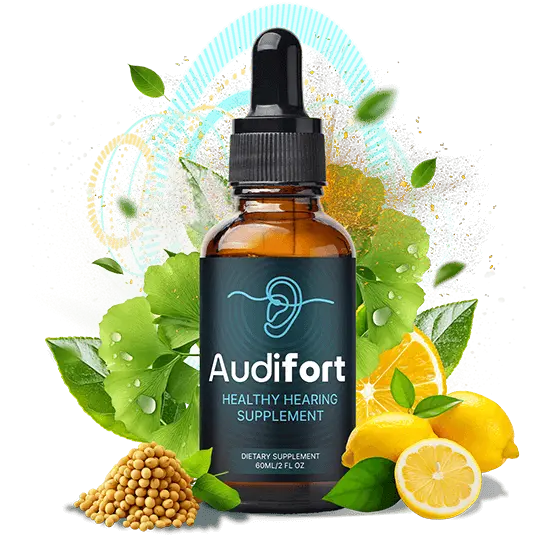
Audifort is a liquid formula — simply add a few drops to your morning coffee, water, or smoothie. This delivery format supports faster absorption compared to traditional capsules, getting the active ingredients into your system more efficiently.
Audifort is backed by a full 90-day money-back guarantee. If you are not completely satisfied with your results — even if you have used all six bottles — simply contact the official customer support team within 90 days for a complete refund. No questions, no hassle.